
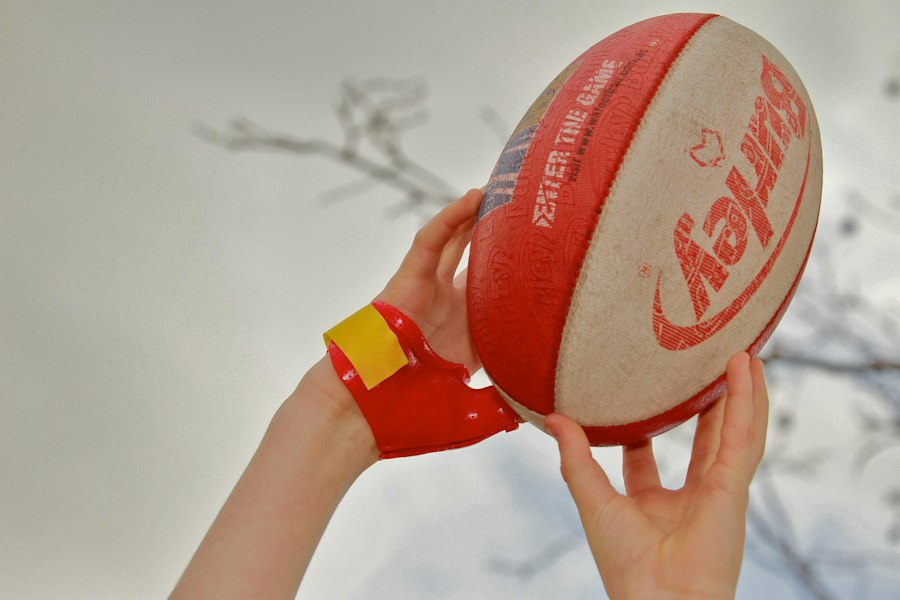
Ball vs Finger: Is It Just a Jarred Finger or Something More?
October 2026
It is a very common story.
A football, netball, basketball or cricket ball catches the end of your finger. It hurts, swells up and feels stiff, but you can still move it, so you assume you have simply jarred it.
Sometimes that is all it is.
But a jarred finger only describes how the injury happened. It does not tell us what has actually been injured.
A ball striking the end of the finger can affect the bone, joint, ligament or tendon. Some of these injuries can look quite minor at first but may need more specific treatment.
What should I look out for?
After a ball injury, some pain and swelling is expected.
However, it is worth getting the finger assessed if you notice:
- Significant swelling or bruising
- Tenderness directly over the bone or joint
- Difficulty bending or straightening the finger
- A fingertip that suddenly droops
- A finger that looks crooked or out of position
- A finger that rotates or crosses over another finger when making a fist
- Pain that is not settling
- Swelling or stiffness that is not improving
- Difficulty gripping or using the hand normally
How the injury happened can also give us useful information. A ball hitting the fingertip directly, bending the finger backwards or forcing it sideways can each injure different structures.
Do I need an X ray?
Not every finger injury needs an X ray.
If there is significant trauma, localised bony tenderness, deformity, reduced movement or ongoing pain and swelling, an X ray may be appropriate.
An X ray can help identify fractures, small avulsion injuries, dislocations and changes in joint alignment.
It is also important to remember that a normal X ray does not always mean there is no injury.
X rays are very good at showing bones, but they do not show all the tendons, ligaments and other soft tissues around the finger.
This is why a clinical assessment is still important.
How can Flex Physiotherapy help?
At Flex Physiotherapy, we can assess your finger injury and help determine whether an X ray, further imaging or medical review is needed.
We look at how the injury happened, where you are tender, how the finger moves, joint stability, tendon function and how the finger lines up when you make a fist.
We can also provide taping, bracing or a custom made splint if required, then guide your rehabilitation as the injury heals.
Having your finger properly assessed means you can be reassured that the injury has been looked at thoroughly and that the right management plan is in place.
If you have taken a ball to the finger and it still feels painful, swollen, stiff or difficult to move, it is worth having it checked.
It may be just a jarred finger, but sometimes there is more going on.